Cast: Vimal, Natraj, Sanashka Sri, Munishkanth, Naren, Indhumathi, Bala Saravanan, Madhusudhan Rao, Deepa Shankar
Director: Kenthiran V
Music: D. Imman
Producer: Masani Pictures – Rajasekar R.
A respected elder in the village, Naren rescues cows that are about to be sent to slaughter and takes care of them in his own cowshed. His son Vimal also shares the same love and compassion for cattle. When a physically challenged calf that was meant to be slaughtered comes his way, Vimal chooses not to send it to the cowshed but instead raises it in his own home.
With dedication and training, he prepares the calf to become a powerful bull for the traditional Manjuvirattu competition. Over the years, the bull becomes famous as one that no one has been able to tame.
Meanwhile, Vimal’s bull is undergoing treatment in a hospital, and Vimal himself is released on bail in a murder case. Soon after, a gang attempts to kill him inside the court premises. At the same time, someone who once worked in his house also plots to murder him. Surrounded by enemies and conflicts, Vimal forgets the happiness he once had and lives a troubled life. At that moment, the love of Sanashka Sri brings joy back into his life.
Encouraged by love and the improving health of his bull—now ready to return to the Manjuvirattu arena—Vimal decides to move forward in life. However, his girlfriend Sanashka Sri gives him a shocking surprise. What is that shock? Does Vimal overcome the enemies who threaten him? Does his bull succeed again in the Manjuvirattu arena? The film presents these developments in a commercial narrative.
Tamil cinema has seen several films centered around Jallikattu, but Vadam stands out for focusing on the Vadamaadu Manjuvirattu tradition. Though the film does not delve deeply into the rules and details of the sport, director Kenthiran V strongly portrays the pride and rivalry among the people connected to it.
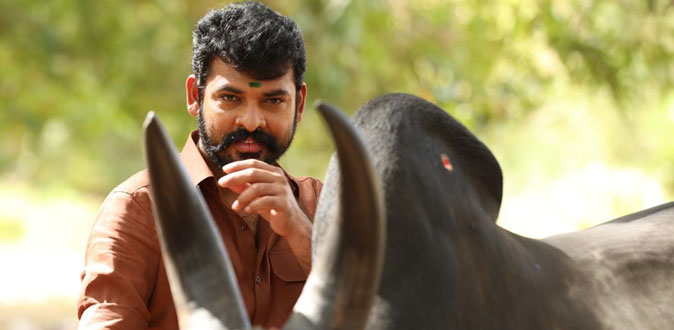
Vimal plays the character Vetri Vel, a man who loves cattle and trains bulls for Manjuvirattu competitions. As usual, he delivers a calm and natural performance. While most heroes show mass appeal by taming bulls, Vimal impresses by playing the proud owner of an untamable bull.
Sanashka Sri, who plays the female lead, captivates with her beauty and screen presence. She also reveals a surprising and intense side in a key moment. However, limiting that impactful moment to just one scene and giving her fewer sequences becomes a disappointment for the audience.
Natti Natraj delivers a strong performance as a character who treats bulls and Manjuvirattu with great pride and believes that victory is everything in life.
Munishkanth, known mostly for his comedy roles, appears in a significant character role here. His natural performance adds great strength not only to his character but also to the screenplay, and it would not be surprising if he earns recognition for this role.
Naren, playing Vimal’s father, delivers an energetic performance, though at times slightly exaggerated. Indhumathi as Vimal’s mother, Deepa Shankar as the aunt, Bala Saravanan as a relative, and Madhusudhan Rao as the antagonist all effectively portray the people of the southern districts.
Cinematographer Prasanna S. Kumar captures the Manjuvirattu arena and competitions realistically. While the locations may appear familiar from other films, the visuals are bright and effectively present the production scale.
Composer D. Imman, known for delivering memorable songs, does not quite achieve the same impact here. Though the songs carry shades of his earlier works, they fail to stand out strongly, while the background score remains adequate.
Although the story revolves around Manjuvirattu, the film focuses more on themes of pride, rivalry, and conflicts among the people of southern Tamil Nadu. Editor Sabu Joseph VJ keeps the narrative engaging with several twists.
Director Kenthiran V deserves credit for choosing the less-explored Vadamaadu Manjuvirattu as the backdrop and filling the screenplay with commercial elements. However, the film does not explore the sport’s rules and culture in depth. Instead, it focuses on the rivalry surrounding the protagonist, which is presented in an engaging way.
Compared to his previous films, Kenthiran V shows clear growth as a director. Even though the screenplay does not introduce many new cinematic techniques and occasionally reminds viewers of earlier Tamil films, he succeeds in delivering an entertaining commercial film that appeals to a wide audience.