Meanwhile, two new students, Charan Lakkaraju and Suryaraj Veerabathini, are allotted Room No. 417 in the hostel. They are strictly warned never to attempt to open Room No. 418 under any circumstances.
One day, a female student secretly tries to enter the boys’ hostel. At that moment, Suryaraj Veerabathini, who is alone in his room, is brutally attacked by a mysterious shadow figure. After the girl who attempted to enter the hostel is chased away, Suryaraj manages to escape from the shadow’s attack. However, when nobody believes his account of what happened, he decides to leave the college.
But considering the educational loan his parents have taken for his studies and their dreams for his future, he decides that he must complete his education no matter what. He also begins investigating the mystery behind the paranormal activities taking place in the hostel.
Does the student’s investigation reveal the truth behind the horrifying incidents in Room No. 418? Do they manage to discover a solution and put an end to the problem? These questions form the crux of 418, a film that goes beyond delivering a conventional horror experience to explore psychological trauma and its consequences.
The actors who portray college students, including Charan Lakkaraju, Suryaraj Veerabathini, Sri Vaishnav, Shashank Patil, and Preethi Bagadala, who plays a hospitalised COVID-19 patient and later becomes a friend of the students, have all delivered satisfactory performances.
Suryaraj Veerabathini, who survives an encounter with the supernatural, effectively portrays fear and anxiety, making the audience feel equally tense. Despite being aware that every moment inside the college campus could be dangerous, his curiosity to uncover the truth behind the threat, combined with his expressions of fear, makes his performance convincing.
The youthful chemistry between Charan Lakkaraju and Preethi Bagadala provides some relief to audiences overwhelmed by the frightening atmosphere. Meanwhile, their dangerous journey and the desperate attempts of their fellow students, Shashank Patil and Sri Vaishnav, to survive keep viewers on the edge of their seats.
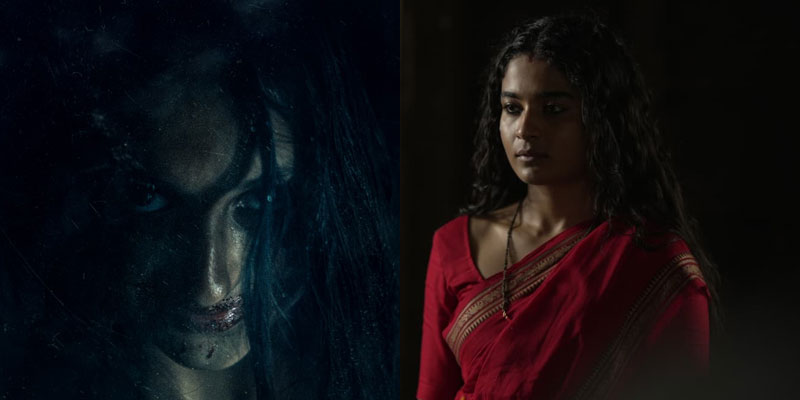
Chaitra Achar, who plays Devika, the central character behind the mystery, manages to frighten audiences with just her appearance and expressions. Dressed in a saree resembling the traditional attire of a street-theatre performer and wearing ankle bells, her movements create an unsettling atmosphere. The lullaby she sings further intensifies the fear, almost serving as a warning that something terrible is about to happen.
Technical Aspects
Cinematographer Dinesh Divakaran deserves appreciation for his effective use of darkness and light in creating the film’s frightening atmosphere. The minimal lighting is used so effectively that viewers are often left searching the screen to understand what is lurking in the shadows. This technique maintains a constant sense of tension. In particular, the way the supernatural attack inside the student’s room is filmed makes for a genuinely nerve-racking experience.
Music composer Venki G.G. turns the sound of ankle bells and the lullaby into frightening elements, creating suspense throughout the film. The background score, along with the terrifying screams heard during otherwise silent moments, sends chills down the audience’s spine.
Editor Akul Avinash has done a commendable job of assembling the sequences, maintaining curiosity throughout the film about where and when the next horrifying incident might occur.
Ullas Haidour’s production design also deserves praise. The boys’ hostel, Devika’s house, the surrounding environment, and even the road leading to the college are designed in a way that creates an unsettling sense of fear.
Verdict
Director Krithan Nadagowda deserves appreciation for presenting a psychological horror story in a manner that keeps audiences intrigued. Rather than following the familiar formula of conventional horror films, he offers a different approach to explaining the supernatural mystery and its underlying story. The film also highlights, in a shocking manner, the serious consequences that psychological problems can have.
From the very beginning, the director grabs the audience’s attention with a horrifying incident that creates an atmosphere of dread. In the following sequences, he cleverly uses the room number 418 itself as an element of fear, making even the mere appearance of the number unsettling.
By maintaining suspense and keeping viewers engaged until the very end, Krithan Nadagowda delivers a psychological horror thriller that offers more than just scares.
Overall, 418 is an engaging psychological horror thriller that stands out for its eerie atmosphere, effective performances, technical excellence, and an unconventional storyline.