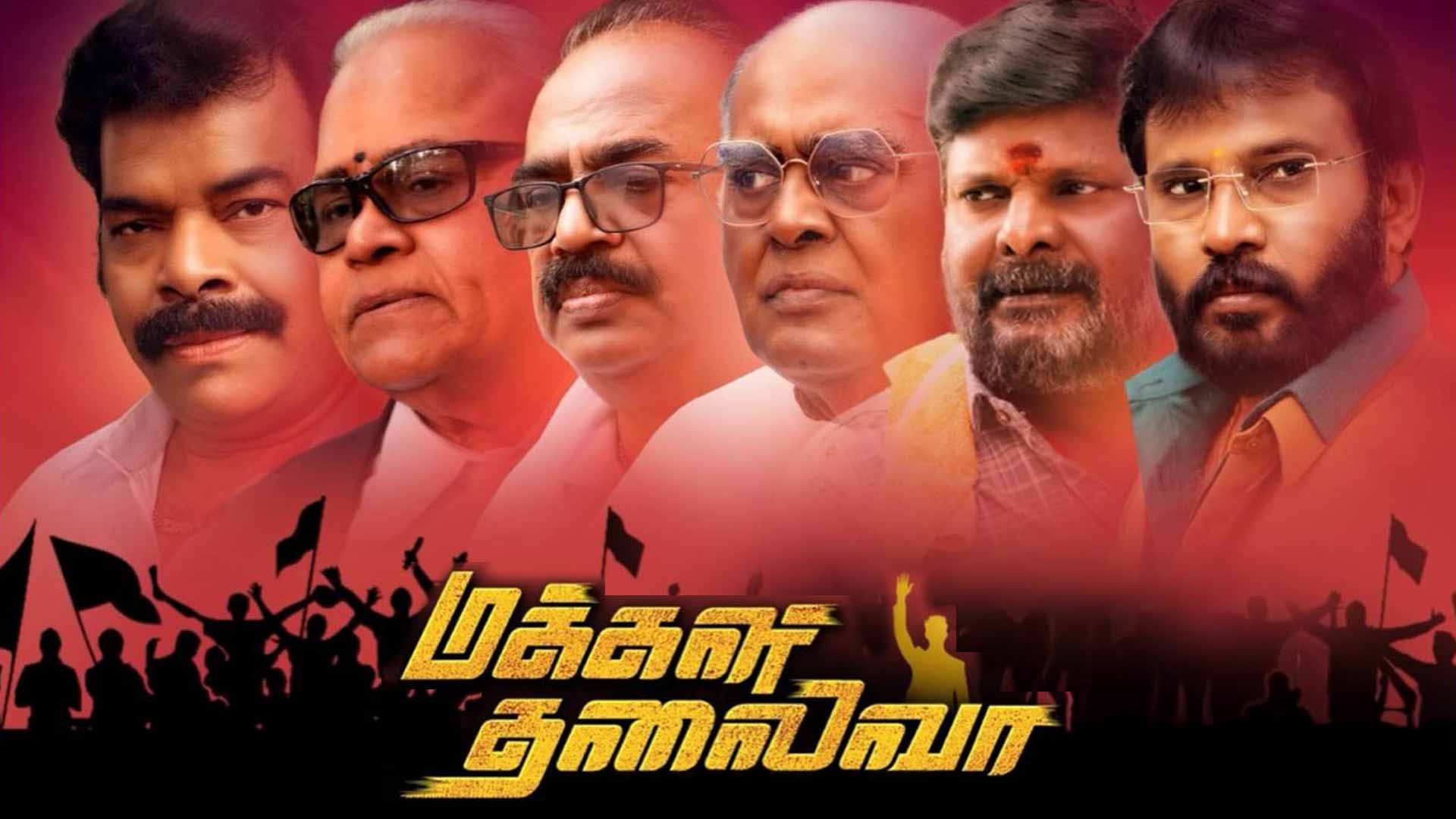
Ravi Mariya, who spends his life idling around without a job and survives on money earned through fake protests, gets a lucky break through the wealthy Radha Ravi. Planning to play a political game in Tamil Nadu using his wealth, Radha Ravi decides to use Ravi Mariya for his scheme. He first turns Ravi Mariya into a film hero and then launches a political party under his leadership.
Following Radha Ravi’s instructions blindly, Ravi Mariya gains popularity among the public not through genuine service but through clever publicity campaigns. Within a short period, he rises to become a people’s leader.
As election day approaches, Radha Ravi joins the party himself, while Ravi Mariya is injured in an accident and sent abroad for advanced medical treatment. This raises the question of who will be the party’s chief ministerial candidate. At that moment, a bold decision taken by Radha Ravi turns Tamil Nadu’s political history upside down. The film explores the consequences of that decision, the reason behind Radha Ravi’s political game, and presents it all as a satire on contemporary politics.
Ravi Mariya, known primarily for villainous and comedic roles, performs effectively as the lead character. Audiences get to see a different side of him through romantic songs and political speeches. Though he does not display a major transformation in acting style, he handles the role of an ordinary Tamil citizen convincingly and strengthens the film.
Radha Ravi, playing a successful Tamil executive working in a leading international company, brings to life the idea that with enough money and the intelligence to use it effectively, political success can be achieved easily.
Pazha Karuppaiah plays a character that highlights the struggles of politicians who continue to follow outdated political methods in today’s technologically advanced era, and the resulting crisis faced by their parties. His performance and dialogue delivery provide comic relief.
Nanjil Sampath, representing opportunistic politicians; Ganja Karuppu, who becomes a minister simply because he is the hero’s friend; Agni S. Varun as another friend; director Perarasu as an auto driver who questions unfair pricing; Payilvan Ranganathan as a YouTuber; director Ranganathan; and Akshara Vijay, who appears only in a song sequence as the heroine, all suit their respective roles well.
Cinematographer Karthik S. Nair has made effective use of available resources. Even when filming in limited locations, he creates visual variety through different camera angles and presents simple settings attractively.
Thulasiraman’s songs and lyrics are commercially appealing, while the background score supports the scenes appropriately.
Despite having many dialogue-heavy sequences, editor Durgesh deserves praise for keeping the film’s runtime under two hours by trimming scene lengths efficiently.
Director Ramdev builds the screenplay around the recent changes in Tamil Nadu politics and the emergence of new political figures. He boldly addresses the political business that often operates behind successful leaders.
Although the story and characters are fictional, the film clearly reflects contemporary political events, making it engaging. However, at certain points, Ramdev seems to lose focus on his central message, and this confusion becomes evident in some screenplay twists.
Tamil cinema audiences have seen many political satires before. While Ramdev succeeds in using current political changes to entertain, provoke thought, and generate laughter, greater attention to screenplay structure and scene execution could have made the film create a much stronger impact.