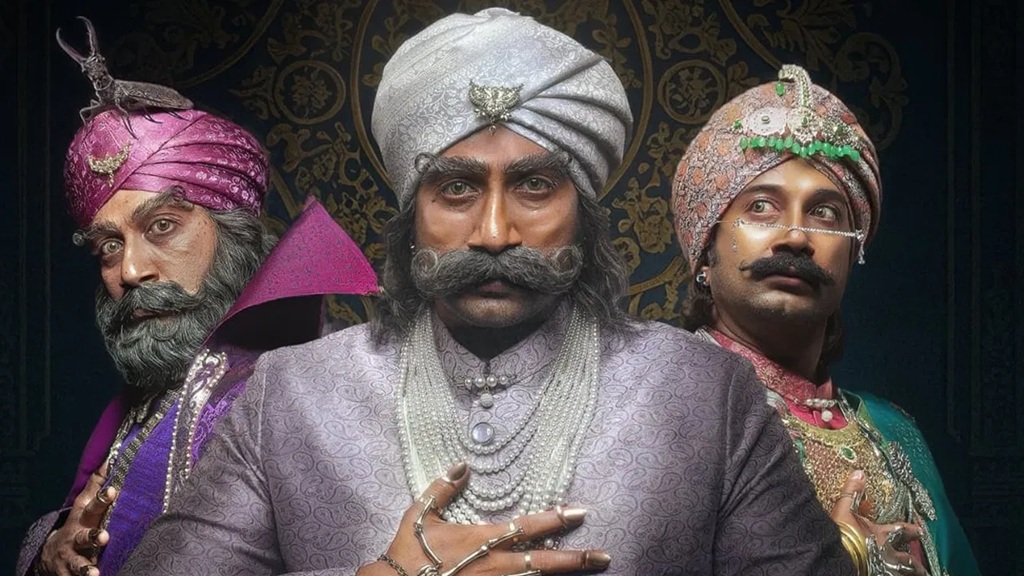
The film follows Rampa Rao Bahadur (played by Sathya Dev), a man born into a royal lineage who is spending the final days of his life battling old age, deteriorating health, and emotional trauma. Despite outliving the time doctors predicted he had left, he tells his close friend and physician, Vikas, that one unresolved question has been haunting him for years. He believes he can only die in peace once that mystery is answered.
What is this lingering doubt? What secrets lie hidden in his past? How did his love story and marriage with Deepa Thomas unfold? And why does he harbor such deep resentment toward his younger son?
These questions form the foundation of ‘Rao Bahadur’, which is far more than a conventional period drama. It is an engrossing psychological thriller and a hard-hitting commentary against caste discrimination, colour prejudice, and the arrogance associated with royal heritage.
Director Venkatesh Maha delivers an unconventional period film with an innovative narrative structure and layered storytelling, creating a cinematic experience rarely seen in Telugu cinema.
Sathya Dev carries the entire film on his shoulders with an exceptional performance as Rampa Rao Bahadur. Effortlessly portraying both the younger and older versions of his character, he distinguishes the two not only through makeup and costumes but also through subtle changes in body language, facial expressions, and dialogue delivery. His portrayal of anger, guilt, emotional turmoil, hatred, and psychological conflict is remarkable, making his performance the film’s greatest strength.
Vikas Muppala, playing the protagonist’s friend and doctor, delivers a convincing performance while effectively supporting the screenplay’s psychological twists. Deepa Thomas also performs her role with sincerity and surprises the audience with a revelation in the climax that significantly alters the emotional impact of the story.
The supporting cast, including Bala Parasur, Anand Bharathi, Pranay Vega, and Master Kiran, fit their respective characters perfectly and leave a lasting impression.
Cinematographer Karthik Parmar avoids the visual clichés typically associated with period films. Instead, he employs a distinctive palette of colours and creative lighting techniques that create a fresh and immersive visual experience. His camera work also effectively reflects the protagonist’s evolving psychological state throughout the narrative.
Composer Smaran Sai’s background score is one of the film’s major highlights. The music often conveys emotions that remain unspoken by the characters, while the use of traditional instruments complements the period setting and enhances the dramatic impact of several scenes.
Production designer Rohan Singh deserves special appreciation for meticulously recreating the grandeur of an old palace. His careful use of colours in both the palace interiors and the protagonist’s costumes creates strong visual symbolism and immerses viewers in the film’s world.
Apart from writing and directing the film, Venkatesh Maha also serves as the editor. Rather than presenting a routine historical drama, he crafts a psychologically driven thriller that boldly attacks casteism, colourism, and the pride of aristocratic lineage. His storytelling remains engaging throughout and steadily unveils one surprise after another.
Although the film’s running time and the extended duration of a few sequences occasionally affect its pace, Sathya Dev’s outstanding performance more than compensates for these minor shortcomings.
The film opens with an eerie sequence involving a mysterious young boy threatening the protagonist, giving the impression of a horror film. However, it gradually transforms into an emotionally rich psychological mystery, revealing unexpected twists until the very end. By completely avoiding the commercial formula often associated with mainstream Telugu cinema, Venkatesh Maha delivers a sophisticated film that feels closer to world cinema than a conventional commercial entertainer.