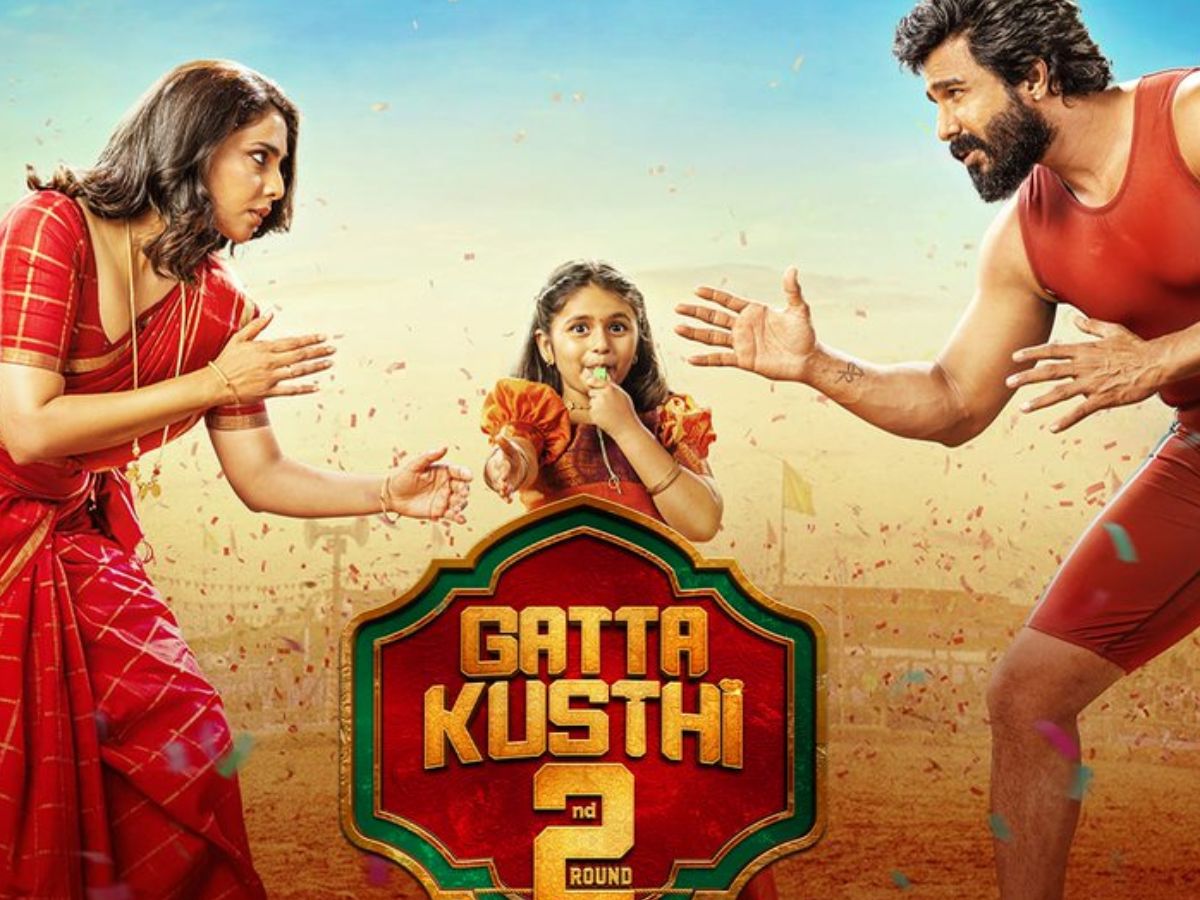
The story continues from the first part. After becoming a mother, Aishwarya Lekshmi feels that she may no longer be able to continue participating in wrestling. However, her husband Vishnu Vishal encourages her by saying that nothing is impossible if one tries, and that she can achieve success again in sports. Not only does he motivate her, but he also takes responsibility for managing the household and caring for their child so that she can focus on her career.
Because of this support, Aishwarya Lekshmi continues to win competitions and fully dedicates herself to wrestling, preparing for the national-level championship. Meanwhile, it is revealed that their daughter is not performing well in studies. Worried that excessive affection may spoil her future, Aishwarya begins disciplining her strictly and even attempts to train her as a wrestler, despite the child’s lack of interest.
This difference in parenting approaches between the couple gradually leads to misunderstandings and small conflicts. These issues eventually threaten Aishwarya’s career dreams and push her to the point of considering divorce. Whether Vishnu Vishal manages to resolve the conflict and reunite with his wife forms the rest of the emotionally engaging and entertaining story of ‘Gatta Kusthi 2’.
Review
Like the first part, the sequel is filled with natural humor. However, director Chella Ayyavu goes beyond comedy and presents additional layers in a simple yet effective manner, making the film enjoyable for both general audiences and families.
Performances
Vishnu Vishal, despite not portraying a typical mass hero image, wins hearts as a supportive husband who respects his wife’s talent and stands by her in every achievement. At the same time, he proves his action hero credentials through a few well-executed action sequences. His performance as a responsible homemaker handling cooking, childcare, and household duties is portrayed convincingly, making his character highly relatable and endearing.
Aishwarya Lekshmi is not just the central character but also the backbone of the film. She excels both as a wrestler displaying fierce determination in the ring and as a wife expressing emotional depth. Her transformation between a strong athlete and a loving partner is portrayed with great ease. Her dance performance in the song “Sambavakkari” is also a standout moment.
The child artist Sara, playing their daughter, steals the show in several scenes with her natural and expressive performance. Whether it is her emotional outbursts, playful moments with her father, or her courtroom scene, she delivers a highly impressive performance.
Karunas once again delivers comedy that triggers continuous laughter, especially through his humorous portrayal of ego-driven situations.
Moksha, playing a teacher, leaves an impression despite her limited screen presence.
Supporting actors such as Munishkanth, Kali Venkat, Lissy Antony, Gajaraj, Sreeja Ravi, and Karunakaran add value with their natural timing and humor rather than just being part of the screenplay.
Special appearances by Ramya Krishnan and Yogi Babu add extra charm to the film.
Technical Aspects
Cinematographer K. M. Baskaran presents the film in a vibrant and visually appealing manner. The climax sequence, especially the wrestling scene featuring the heroine in a saree, is captured brilliantly.
Music composer Sean Roldan delivers a catchy soundtrack. The song “Sambavakkari” is already popular, and when seen on screen, it becomes even more engaging and energetic. The background score effectively supports the film’s mood.
Editor Barath Vikraman ensures smooth pacing, making the film feel engaging without any dull moments.
Direction
Director Chella Ayyavu successfully builds a complete screenplay based on a simple family conflict. He skillfully blends comedy with emotional storytelling without turning it preachy. The film explores misunderstandings between couples and their resolution in a light-hearted yet meaningful manner.
Although the sequel lacks the surprise elements of the first part and becomes somewhat predictable at times, the chemistry between Vishnu Vishal and Aishwarya Lekshmi compensates for these minor shortcomings.
The second half, in particular, keeps audiences entertained with continuous laughter while also delivering emotional depth.