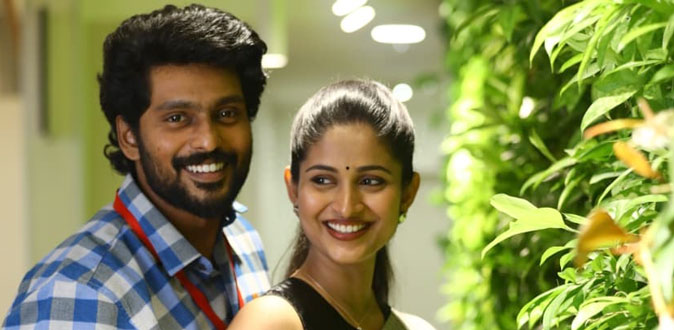
Casting: Raanav, Rosmin, Sampath Raj, Kasturi, Archana, Krithik Mohan, Amitha Ranganath
Directed By: A. R. Gandhi Krishna
Music By: G. V. Prakash Kumar
Produced By: Girija Varadaraj
The core idea of the film is to emotionally portray how love changes with each era, how today’s youth perceive love, and in this fast-paced modern lifestyle, how love quickly arises in young minds and, after becoming a couple, how they move toward separation even faster.
The heroine Rosmin, the daughter of a businessman, gives a job in her company to the hero Raanav, a struggling village youth without proper employment. Their friendship turns into love, but the heroine’s father opposes their relationship. Defying her father, Rosmin marries Raanav and appoints him as the Managing Director of her company, providing him with a comfortable life. However, the happiness and affection they shared as lovers disappear in their married life, and conflicts and hatred begin to grow.
What is the reason for this? After deciding to separate even faster than they fell in love, do they reunite or not? This is the story of the film.
Raanav, known from Bigg Boss, has acted more neatly compared to his first film. He has effectively portrayed various emotional struggles — a young man working for his family, a son distressed about not being able to take proper care of his parents, and a husband affected by his wife’s arrogance of wealth.
Debut actress Rosmin attracts attention by delivering a measured performance in a strong role in her very first film. She accurately reflects the boldness and lack of respect often seen in wealthy women through her performance, and through her expressions, she conveys the idea that a wife is always like this, instilling a sense of fear among men.
The pair Krithik Mohan and Amitha Ranganath, playing another lead couple, bring youthful energy and conflict appropriate to their age, strengthening the screenplay.
Sampath Raj as the heroine’s father, Kasturi as a doctor, and Archana as the hero’s mother contribute strength to the film with their experienced performances.
M.V. Panneer Selvam’s cinematography is colorful and visually pleasing.
The music by G. V. Prakash Kumar is surprisingly underwhelming, with his talent not fully reflected in the songs. The same applies to the background score.
Editing by S. Basker and Sujith effectively conveys the emotions of the characters to the audience.
In today’s times, where youth quickly decide on love through social media, move to marriage the very next day, and just as quickly decide on separation, director A. R. Gandhi Krishna emotionally answers why this happens. However, he attributes the reason for separation between couples to the same age-old causes that have existed for years.
Without deeply analyzing modern love and relationships, the director focuses more on family issues and the resulting separation. Presenting it in a slightly old-fashioned manner reduces the pace of the screenplay and the excitement in the romance. At the same time, the scenes and dialogues designed to advise lovers and couples will definitely make the audience think.
Director A. R. Gandhi Krishna raises an important question about modern relationships—why do today’s couples rush into love, marriage, and even separation?
However, instead of deeply exploring contemporary love dynamics, the film leans toward familiar family conflict themes. The somewhat old-fashioned treatment slows down the screenplay and reduces the excitement in the romantic portions.
That said, several scenes and dialogues are thought-provoking and offer meaningful insights for couples.