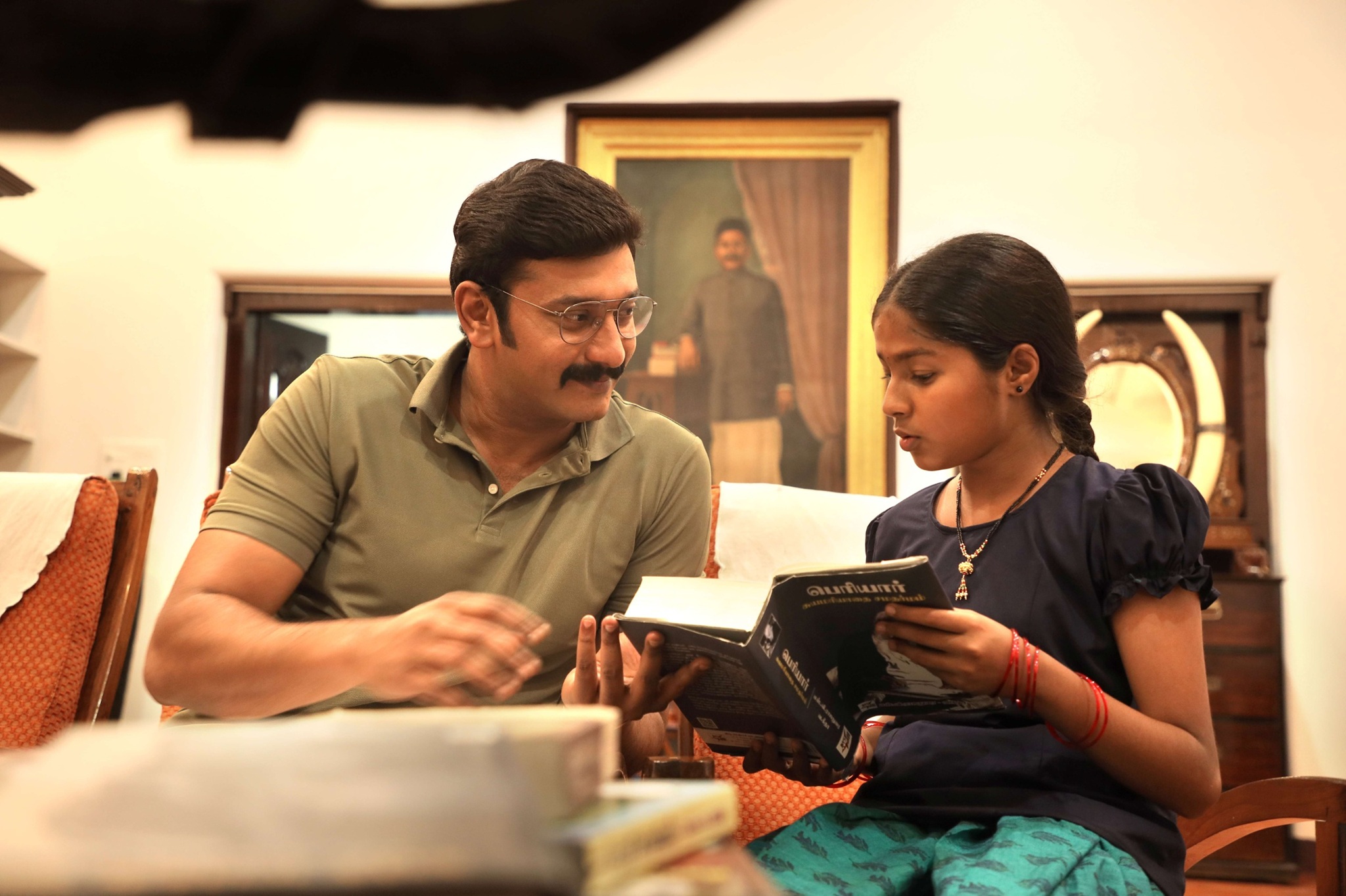
A young tribal girl named Krithika, who lives in a remote hill village, dreams of getting an education. However, her difficult living conditions and the lack of basic facilities become major obstacles to her dream. Determined not only to study herself but also to ensure that the children in her village receive an education, she begins her journey. Her mission gains support from District Collector Muthuvel (Arulnithi). The film tells, with strong social concern, whether the Collector’s efforts help fulfill the young girl’s dream of education.
Arulnithi plays the role of an honest District Collector dedicated to the welfare of tribal communities. With his mature and restrained performance, he brings authenticity to the character of Muthuvel. His calm screen presence and expressive body language add great strength to the film. Setting aside conventional heroism, he gives priority to the story and earns appreciation for his performance.
Aarav, who plays another key role, has clearly put in considerable effort to transform himself into a tribal character. Although he doesn’t completely blend into the role in a few scenes, he delivers a sincere and competent performance.
Ramya Pandian has a limited role, but she performs it effectively and leaves a positive impression.
Krithika, who plays the young tribal girl, stands out with a natural and emotionally powerful performance. She convincingly portrays her passion for education, as well as the fear, loneliness, and longing she experiences after being separated from her parents, making a significant contribution to the film.
The supporting performances by Kaali Venkat, John Vijay, and VTV Ganesh further strengthen the screenplay.
Cinematographer M. Sukumar beautifully captures both the scenic beauty of the hills and the everyday lives of the tribal people.
G. V. Prakash Kumar’s songs reflect the story and the emotional struggles of the characters, while his background score brings depth and emotion to the hardships faced by the hill communities.
Editor Lawrence Kishore keeps the narrative steady, allowing the film’s real-life inspiration and emotional impact to resonate with the audience.
Director Ganesh Vinayagam effectively highlights the harsh reality that, despite rapid technological progress, many people still lack access to education and basic necessities. He presents the lives of tribal communities honestly and without compromise.
Although the absence of commercial elements makes certain portions feel like a documentary, the fact that the story is based on real-life incidents gives the film emotional weight and leaves a lasting impact.
Overall, Ganesh Vinayagam succeeds in realistically portraying the struggle of remote tribal communities for education and basic amenities, creating a film that not only moves audiences but also encourages policymakers and authorities to reflect on these pressing issues.